
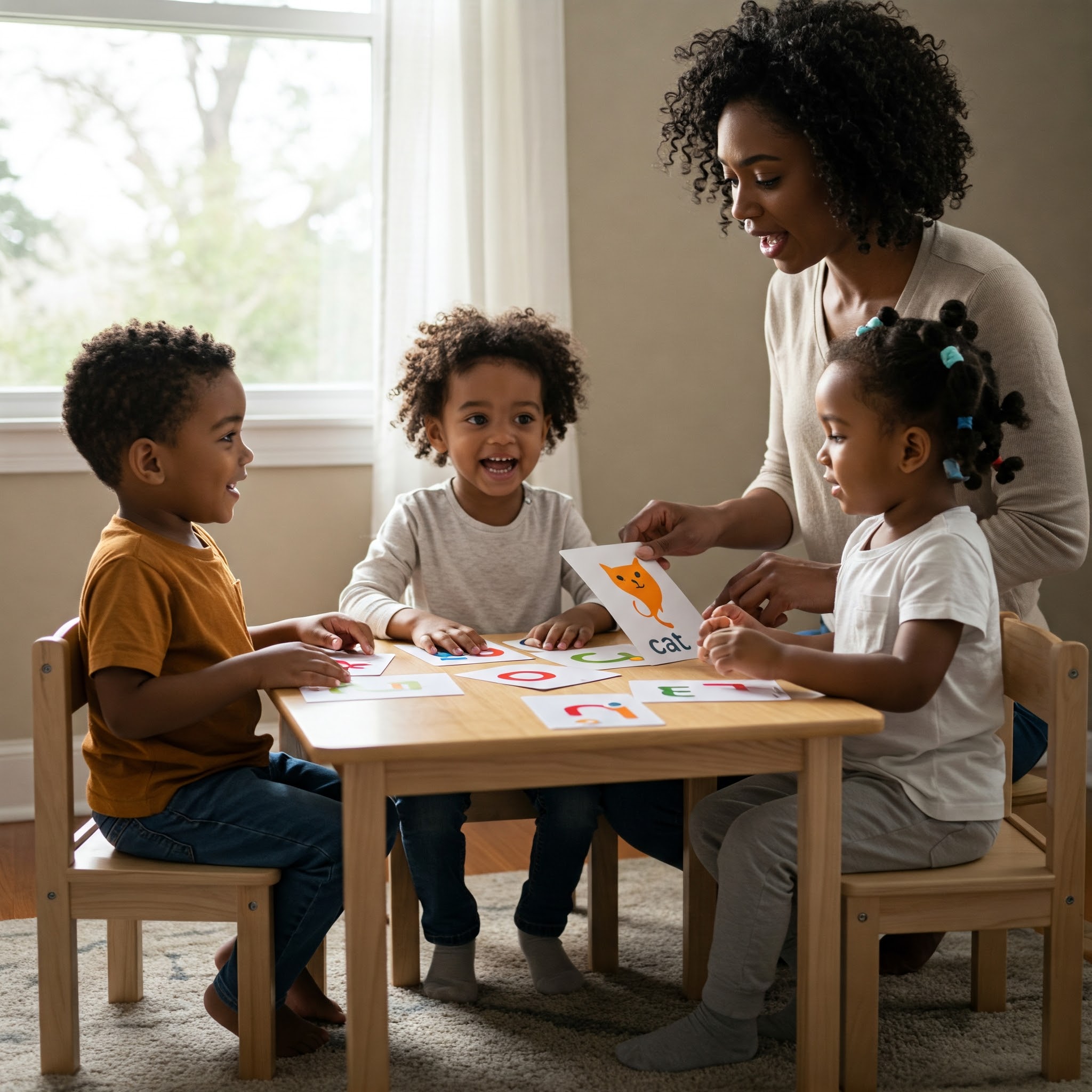

From the first coos to complex conversations, witnessing your child's language blossom is a truly incredible experience. It's a journey filled with milestones, funny mispronunciations, and moments of sheer wonder as they unlock the power of communication.
As parents and caregivers, you play the most vital role in nurturing this development.
This guide will walk you through the fascinating stages of language acquisition, offering insights and practical tips to support your little one every step of the way.
- The Very Beginning: Before Words (Birth to 12 Months)
Even before your baby utters their first recognizable word, they are actively laying the groundwork for language. This prelinguistic stage is all about listening, observing, and experimenting with sounds.
- The Language of Cries (Birth to 2 Months): Crying is your newborn's primary way of communicating needs – hunger, discomfort, tiredness. You'll gradually learn to differentiate these cries.
What you can do:
- Respond promptly and lovingly to their cries. This builds trust and shows them that their communication matters.
- Talk softly to them, even if they don't understand the words yet. The rhythm and melody of your voice are soothing and help them tune into language sounds.
- The Joy of Cooing (2 to 4 Months): Around this time, you'll hear delightful vowel-like sounds—"oooo"h," "aaaah," "eeeeh." This is cooing, a sign of contentment and early vocal exploration.
What you can do:
Free Guide: Intro to Course Creation
Ready to turn your expertise into an online course? Enter your details below to receive the guide instantly.
- Respond enthusiastically to their coos! Mimic their sounds and add your own.
- This back-and-forth "conversation" encourages them to keep experimenting with their voice.
- The Babbling Begins (Around 6 Months): Get ready for the exciting stage of babbling! Your baby will start putting consonant and vowel sounds together, often repeating" them—"bababa," "mamama," "dadada." This repetitive babbling is like vocal play and helps them practice the sounds of language. Later in this stage, you might hear more varied babbling with different syllables like "dagabiba."
What you can do:
- Babble back to them! Imitate their sounds and introduce new ones. Point to objects and name them clearly.
- For example, when they babble "baba," you can say, "Yes, that's a ball!"
- Understanding Starts to Bloom (9 to 12 Months): While their own word production might still be limited, your baby is becoming a keen listener. They'll start to understand familiar words like their name, "mama," "dada," "bye-bye," and simple instructions like "no." They'll also use gestures like pointing to show you what they want or waving goodbye.
What you can do:
- Continue naming objects and people around them. Use simple phrases and pair them with actions.
- When waving goodbye, say "Bye-bye!" consistently. Play simple games like "Where's your nose?"
- First Words and Beyond: Entering the World of Meaning (Around 12 to 24 Months)
The arrival of the first true word is a momentous occasion! Typically around their first birthday, children start using single words to convey meaning. These are often called "holophrases" because one word can stand in for a whole sentence.
- The Power of One Word (Around 12 Months): "Juice" might mean "I want juice." "Up" could mean "Pick me up." These first words are usually nouns (names of things) that are important in their daily lives.
What you can do:
- Celebrate their first words! Encourage them by repeating and expanding on what they say. If they say "ball," you can say, "Yes, that's a red ball!"
- Putting Two Together (Around 18 to 24 Months): This is when the magic of simple sentences begins! Your toddler will start combining two words, like "more juice," "daddy go," and "big doggie." These early sentences follow basic word order and focus on conveying essential information.
What you can do:
- Encourage two-word combinations by modeling them.
- If your child points to their shoes and says "shoe," you can say "Yes, put on shoe!" Offer choices that encourage two-word responses, like "Want milk? Say 'more milk' or 'no milk'."
- Building Sentences and Vocabulary: The Toddler Years (2 to 3 Years)
This is a period of rapid language growth, often called the "vocabulary spurt." Your child's understanding and use of words and sentences will explode.
- A Burst of Words: Their vocabulary will increase dramatically, from around 50 words at 18 months to hundreds by age three. They'll start learning verbs (action words), adjectives (describing words), and prepositions (words that show location).
What you can do:
Talk, talk, talk! Name everything you see and do together. Read books with colorful pictures and point to and name the objects. When they ask "What's that?", give them a clear and simple answer.
- Telegraphic Speech Evolves: While they still might leave out some small words like "is" or "the," their sentences will become longer and more complex. You'll hear things like "Daddy go car now" evolving into "Daddy is going in the car now."
What you can do:
Model correct grammar without directly correcting your child. If they say "Me want cookie," you can respond with "Oh, you want a cookie!"
- The Arrival of "Wh-" Questions: Get ready for a lot of "What's that?" and "Where's it gone?" Children start asking simple questions to learn about their world.
What you can do:
Answer their questions patiently and in simple terms. Turn some of their questions back to them: "You tell me, what's that?"
- Learning the Rules (and Sometimes Overdoing It!): This is when you might hear funny grammatical errors like "goed" instead of "went" or "mans" instead of "men." This shows that your child is learning the rules of grammar but hasn't yet mastered the exceptions.
What you can do:
Model the correct forms without direct correction. They will eventually learn the irregular verbs and nouns through consistent exposure.
- Becoming a Conversationalist: The Preschool Years (3 to 5 Years)
Your child's language skills will continue to refine and become more sophisticated. They'll become better at having conversations, telling stories, and understanding more complex ideas.
- Complex Sentences Emerge: They'll start using conjunctions like "and," "but," and "because" to connect ideas and form longer, more detailed sentences.
What you can do:
Encourage them to tell you about their day, their toys, or their imaginary games. Ask follow-up questions to encourage them to elaborate.
- Understanding and Using Different Question Forms: They'll master "who," "when," "why," and "how" questions, showing their growing curiosity about the world.
What you can do:
Engage in back-and-forth conversations, taking turns to ask and answer questions.
- Developing Narrative Skills: Your child will start to tell simple stories, though they might not always be in perfect order or have all the details.
What you can do:
Encourage storytelling by asking them about events and helping them sequence the events. "What did you do at the park first? Then what happened?"
- The Social Side of Language (Pragmatics): They'll become more aware of how to use language in different social situations. They'll learn to adjust their tone, take turns in conversations, and understand simple social cues.
What you can do:
Model polite language ("please," "thank you"). Talk about how different people might feel and how language can affect others.
Your Role as Language Champions:
You are your child's first and most important language teacher. Here are some overarching tips to support their language development at every stage:
- Talk Frequently and Enthusiastically: The more language your child hears, the more they will learn. Talk about everything – what you're doing, what you see, what you're thinking.
- Read, Read, Read! Reading aloud exposes your child to a rich vocabulary, different sentence structures, and the joy of stories. Make it a daily habit.
- Respond and Encourage: Show genuine interest in your child's communication attempts, even if they are not perfect. Your encouragement motivates them to keep trying.
- Create a Language-Rich Environment: Surround your child with books, puzzles, and toys that encourage language play and interaction.
- Be Patient: Language development takes time and happens at different paces for different children. Avoid comparing your child to others.
- Make it Fun! Language learning should be enjoyable. Sing songs, play word games, and tell silly stories together.
- Listen Actively: When your child talks, give them your full attention and listen carefully to what they are trying to say.
- Expand and Elaborate: When your child says something simple, expand on it. If they say "dog," you can say "Yes, that's a black dog!"
- Use Gestures and Visuals: Especially in the early stages, pairing words with gestures and pointing to objects helps children understand meaning.
When to Seek Guidance:
While every child develops at their own pace, there are certain milestones to be aware of.
If you have concerns about your child's language development, don't hesitate to talk to your pediatrician or a speech-language specialist.
Early intervention can make a significant difference. Some things to watch out for include:
- No babbling by 12 months.
- No single words by 18 months.
- Very limited vocabulary or difficulty understanding simple instructions by age two.
- Speech that is very difficult for you to understand by age three.
- Regression in language skills at any age.
The journey of language development is a marathon, not a sprint.
Enjoy each stage, celebrate every new word, and cherish the growing connection you share with your child through the power of communication.
Your love, support, and consistent interaction are the most amazing gifts you can give them on this incredible linguistic adventure.
One thought on “The Amazing Journey of your Child’s Words: A Guide to Language Development for Parents and Caregivers”